

The Mystery of the missing panel.
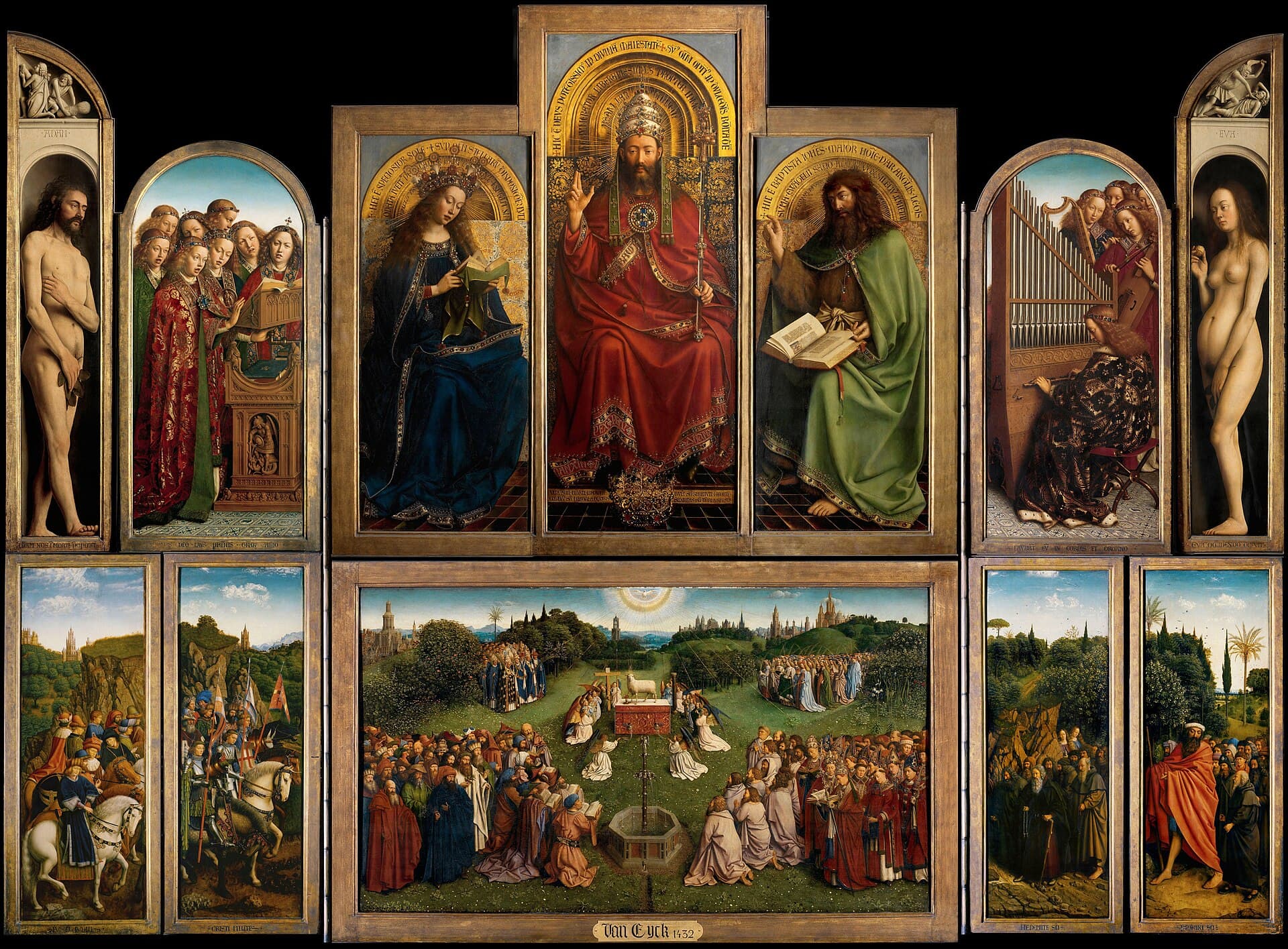
The Ghent Altarpiece is a painting made of twelve panels. Completed in 1432, it has survived theft, war, and a salt mine packed with explosives. But one of its panels, the Just Judges, has been missing since 1934.
There were ransom letters, a returned painting, and a deathbed claim that seemed close to an answer. Nearly a century later, the original Just Judges is still missing. A painted copy fills its place in Saint Bavo’s Cathedral in Ghent.
To understand the missing panel, start with the painting itself: who made it, what it survived, and what happened on the night it disappeared.
Closed and open
Twelve panels, two faces
The wings are hinged like doors. On ordinary days they stayed closed, in quiet grey. On feast days they opened on the full painting. The Just Judges hung at the lower left.
The altarpiece is open, showing the Adoration of the Mystic Lamb in colour.
Chapter one
The brothers’ painting
1426 to 2019
Before there was a missing panel, there was a question about the artists. A verse on the frame says Hubert van Eyck began the painting and Jan finished it. Centuries later, restoration helped explain what each brother contributed.
Ghent / 1426
Hubert van Eyck
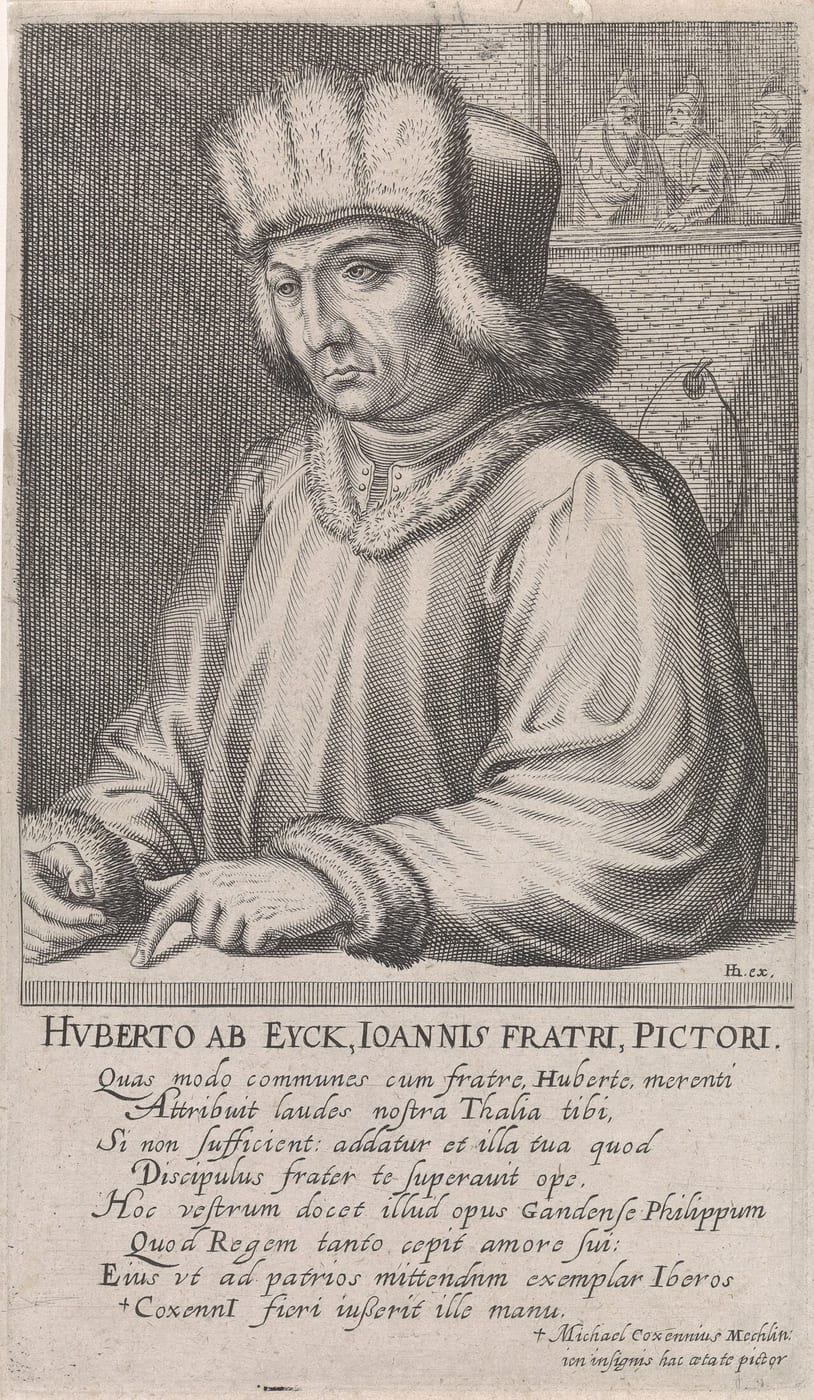
Hubert van Eyck died in 1426, leaving the altarpiece unfinished. This engraving was made in 1610, long after his death. It imagines his appearance; no confirmed likeness survives.
No other surviving painting is securely attributed to Hubert. That absence led some scholars to question whether the verse crediting him had been added later.
Ghent / 1426
Beneath the altarpiece
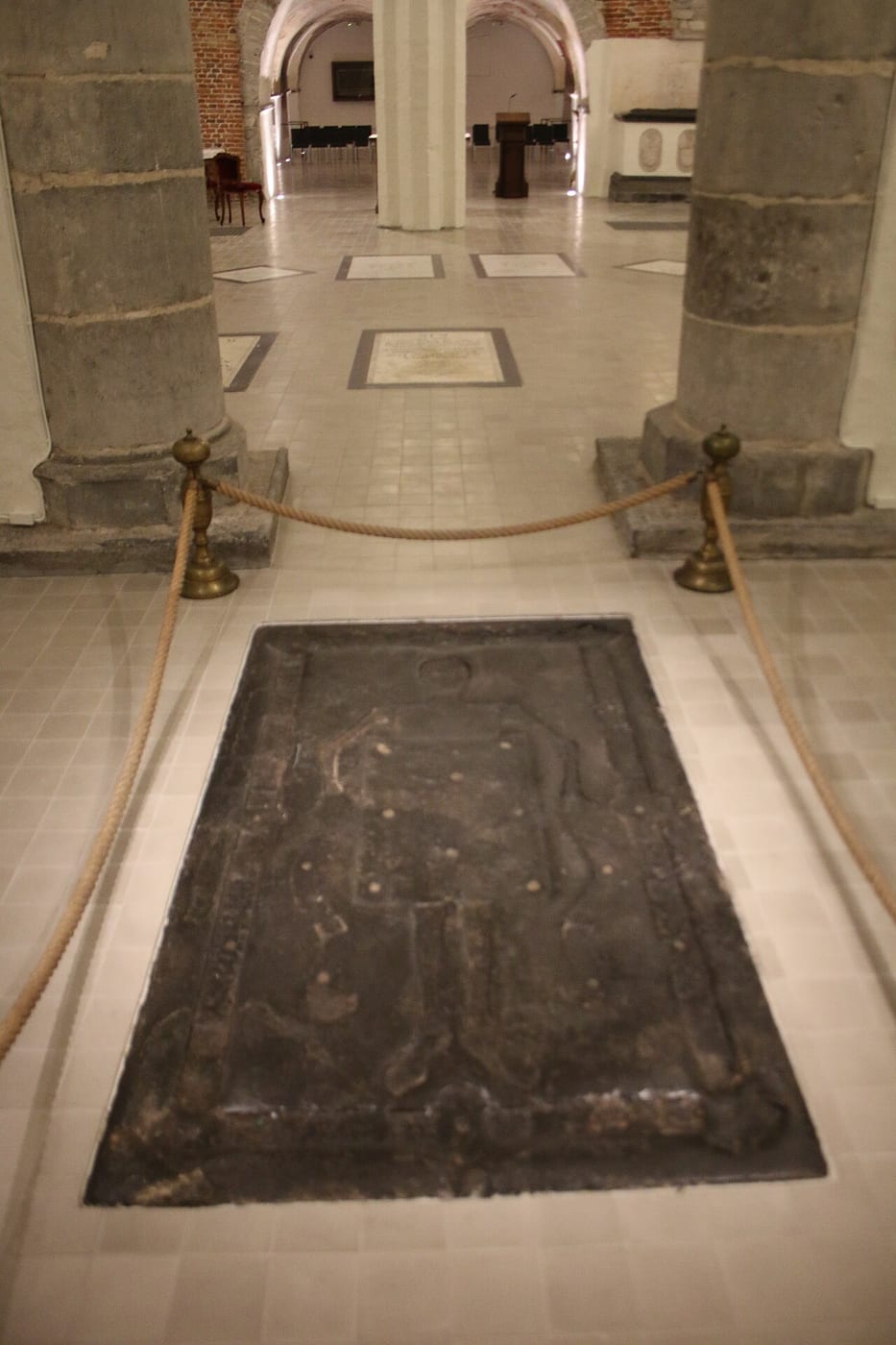
Hubert’s tombstone rests in the crypt of Saint Bavo’s Cathedral, a few metres below the altarpiece he began.
Source: Photo: FrDr, Wikimedia Commons(opens the catalogue record in a new tab)London / 1433
Jan van Eyck
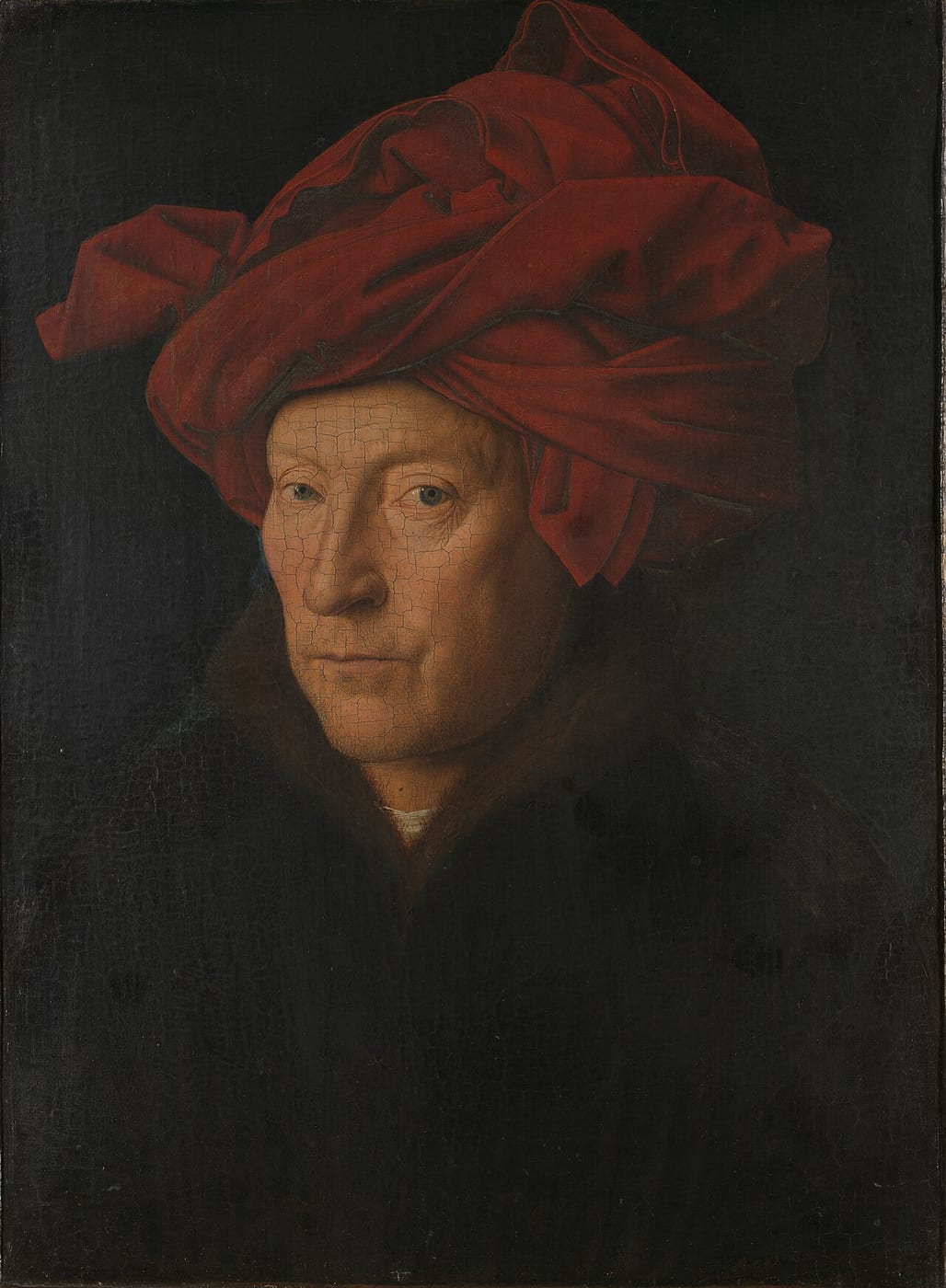
Jan van Eyck painted Portrait of a Man in 1433, the year after the altarpiece was installed. Now in London’s National Gallery, it is often considered a possible self-portrait. After Hubert’s death, Jan completed the altarpiece. But the finished painting did not make it easy to see where one brother’s work ended and the other’s began.
Source: National Gallery, London(opens the catalogue record in a new tab)Ghent / 1432
The everyday view
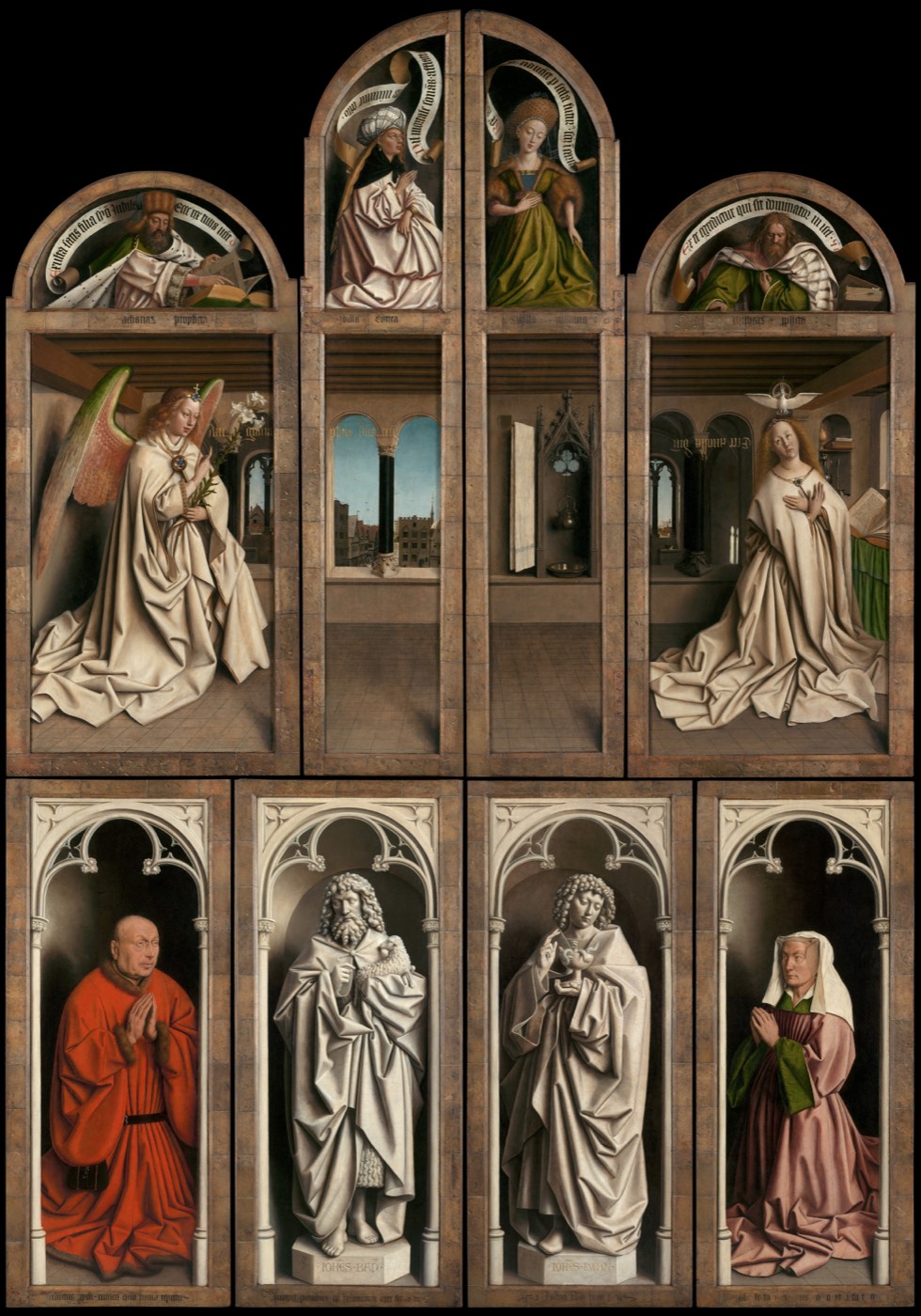
Joos Vijd and his wife, Lysbette Borluut, paid for the altarpiece for their chapel. Its outer panels were hinged like doors. On ordinary days, they stayed closed, showing the announcement of Christ’s birth to Mary, the kneeling couple, and two saints painted to look like stone statues.
Source: Wikimedia Commons(opens the catalogue record in a new tab)Ghent / 1432
Written on the frame
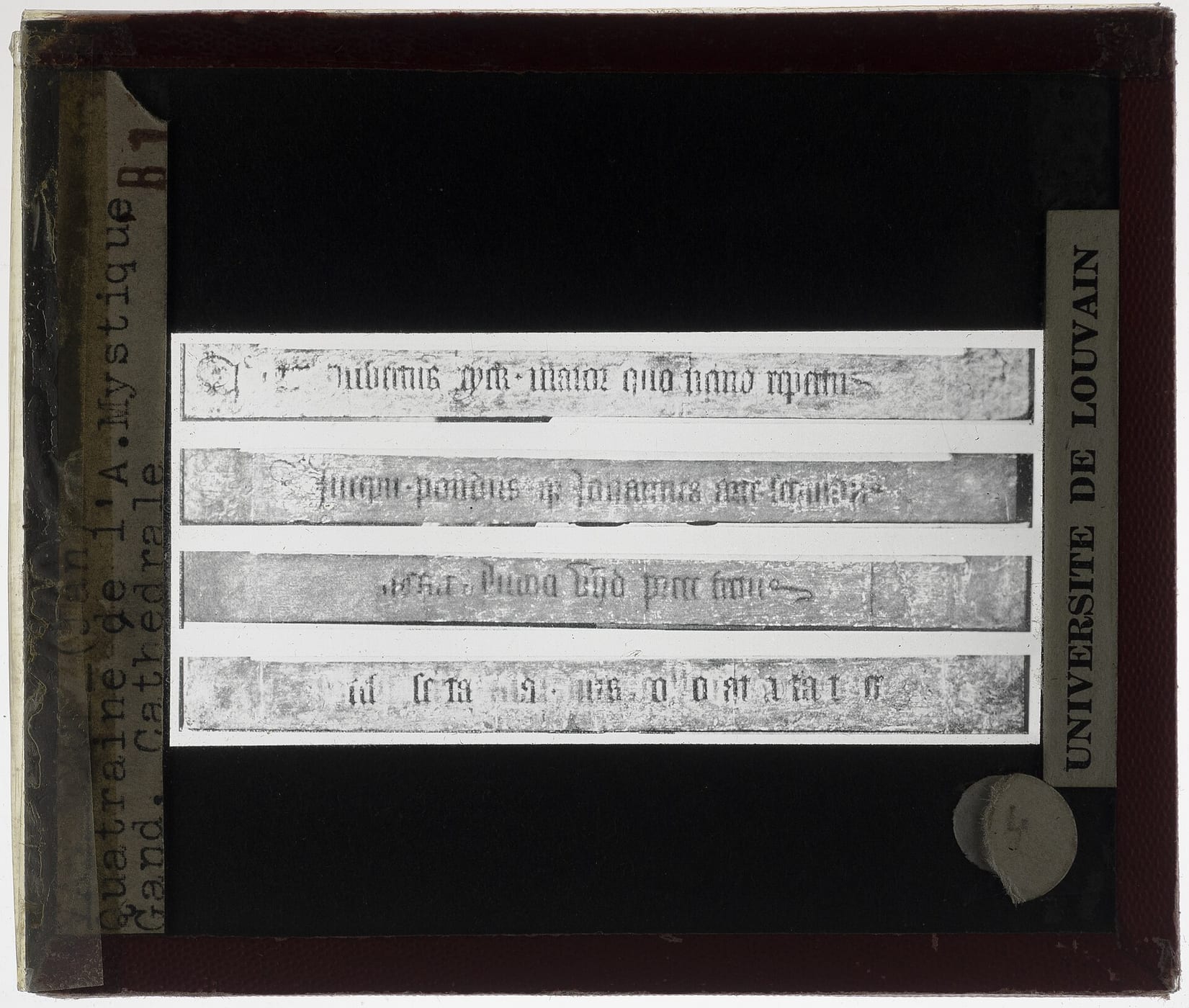
The frame offered an answer to the question of who painted what. A four-line verse, called the quatrain, names Hubert as the artist who began the work and Jan as the one who finished it. This old University of Louvain glass slide records that inscription.
Scholars once questioned whether the inscription was authentic. Restoration confirmed that it was original.
Ghent / 6 May 1432
Adoration of the Mystic Lamb
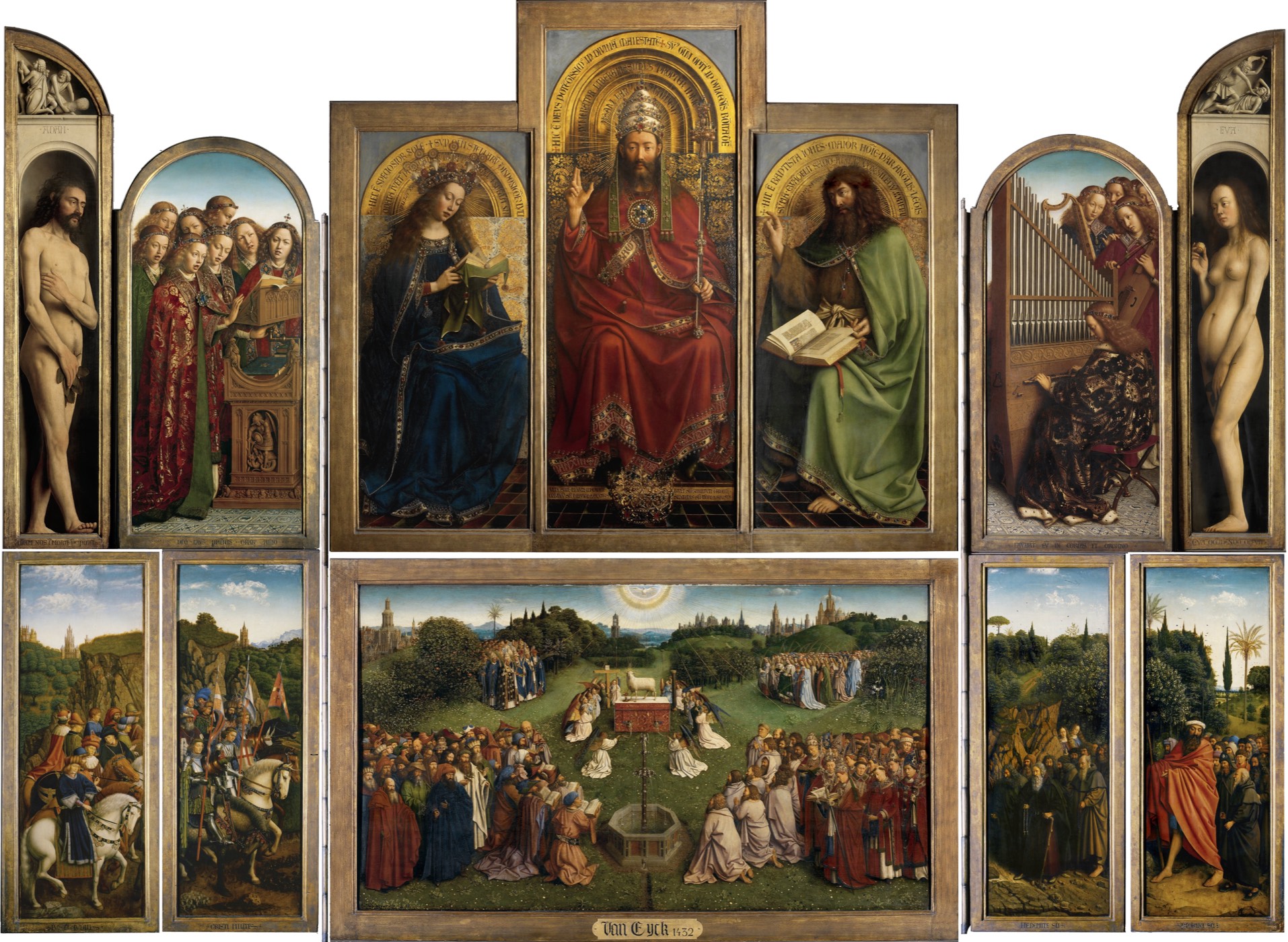
On feast days, the wings opened to reveal the full painting. Above are an enthroned divine figure, Mary, John the Baptist, angels, Adam, and Eve. Below, crowds gather around a lamb on an altar, its blood flowing into a chalice. This central scene gives the work its other familiar name, Adoration of the Mystic Lamb.
Source: Wikimedia Commons(opens the catalogue record in a new tab)Beneath the paint
The frame’s account remained disputed until researchers could look beneath the finished painting. Between 2012 and 2020, a team led by the Royal Institute for Cultural Heritage, KIK-IRPA, studied and restored panels at the Museum of Fine Arts in Ghent. Infrared images and X-ray scans revealed drawings and earlier layers of paint.
On the lower panels, restored between 2016 and 2019, the team found an earlier version attributed to Hubert. He had already painted the sky, hills, distant cities, and a meadow. The altar, lamb, angels, and some central figures were there too, with a spring running through the grass in front.
Jan built on that work after Hubert’s death. He changed the landscape, added more figures, and developed the scene we see today. The team also confirmed that the frame’s inscription was original, supporting its account of the two brothers.
The evidence was there all along, beneath the paint.
Ghent / 2019
The original lamb
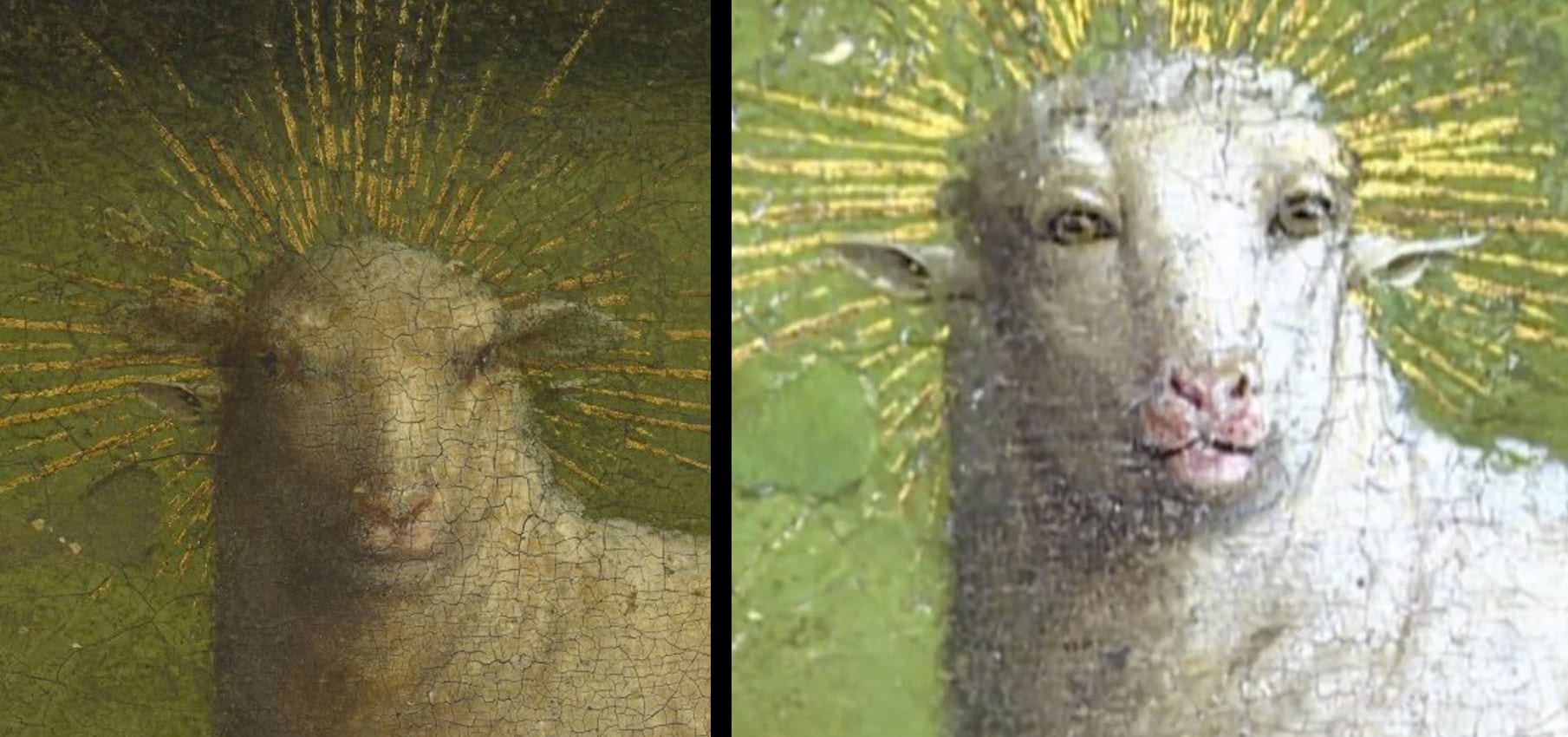
In the sixteenth century, the lamb’s head was painted over with a softer, more familiar animal face. Restoration revealed the original beneath it, with forward-facing eyes and an almost human mouth.
The changes were not limited to the face. Researchers found three versions of the lamb’s body: an early version attributed to Hubert, a revision, and paint added later.
For roughly four hundred years, visitors had seen a different face from the one the van Eycks left. The image on the left shows it before restoration; the image on the right shows the uncovered original.
Chapter two
Taken and returned
1566 to 1945
The painting did not stay safely in its chapel. Over the centuries, its panels were hidden, taken, sold, and returned. During the Second World War, the surviving panels came close to being destroyed together.
Ghent / 1566
Hidden in the tower
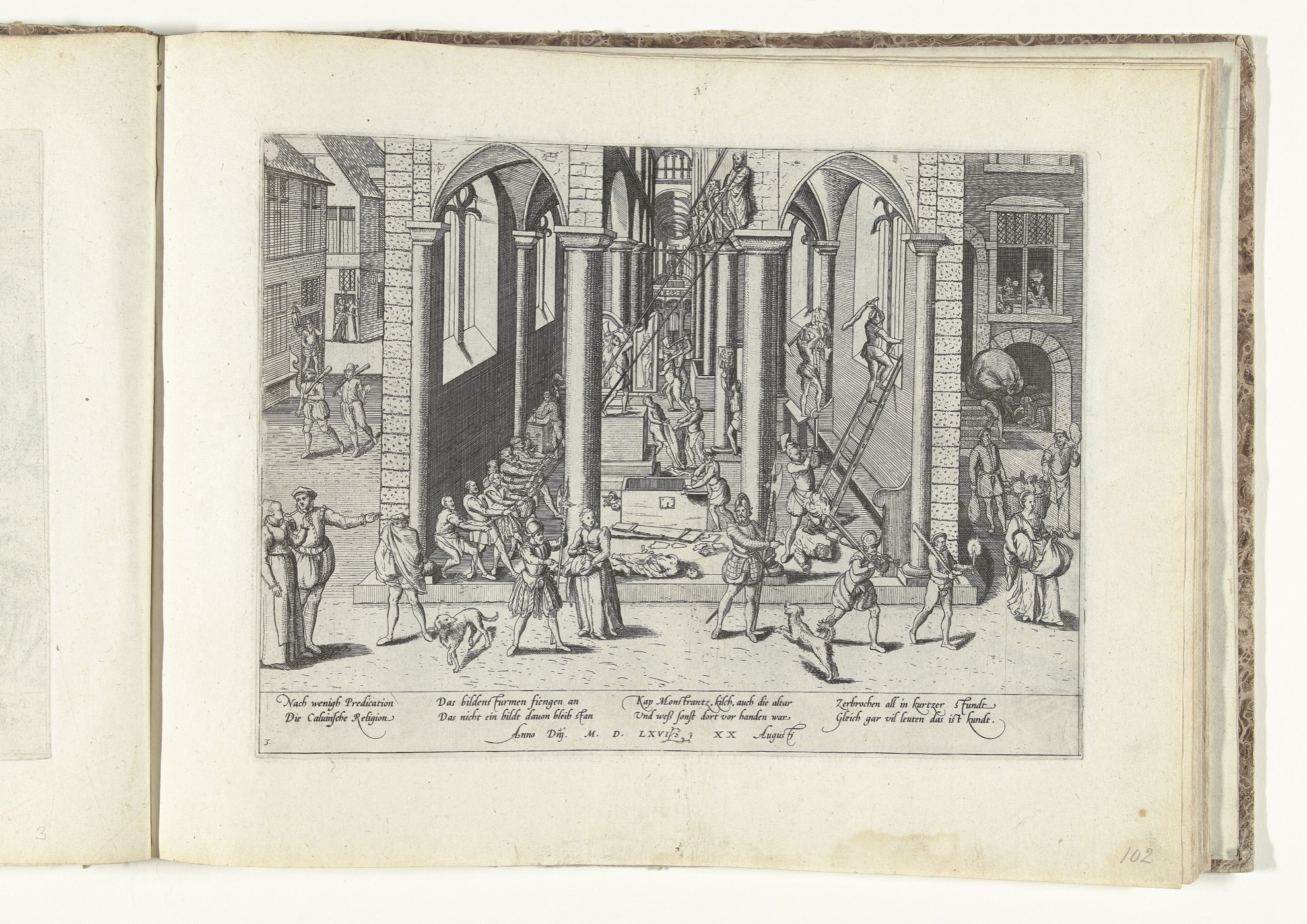
In 1566, Calvinist rioters were destroying religious images. Before they reached the altarpiece, its panels were moved into the cathedral tower for safety. In 1794, French troops took the four central panels to the Louvre. They returned after Napoleon’s defeat. The wings would later follow a different route.
Source: Rijksmuseum, Wikimedia Commons(opens the catalogue record in a new tab)Linz / 1920 to 1945
Hitler wanted it
The next separation came through a sale. In 1816, a cathedral canon sold the outer wings to a dealer. They eventually reached Berlin. Germany now held the wings, while Belgium kept the centre.
During the First World War, Canon Gabriel van den Gheyn helped hide the Ghent panels inside the walls of private houses. He showed the occupying army a letter claiming the painting had been sent to England.
In 1920, the Treaty of Versailles required the Berlin panels to be returned. For the first time in a century, the separated sections were reunited.
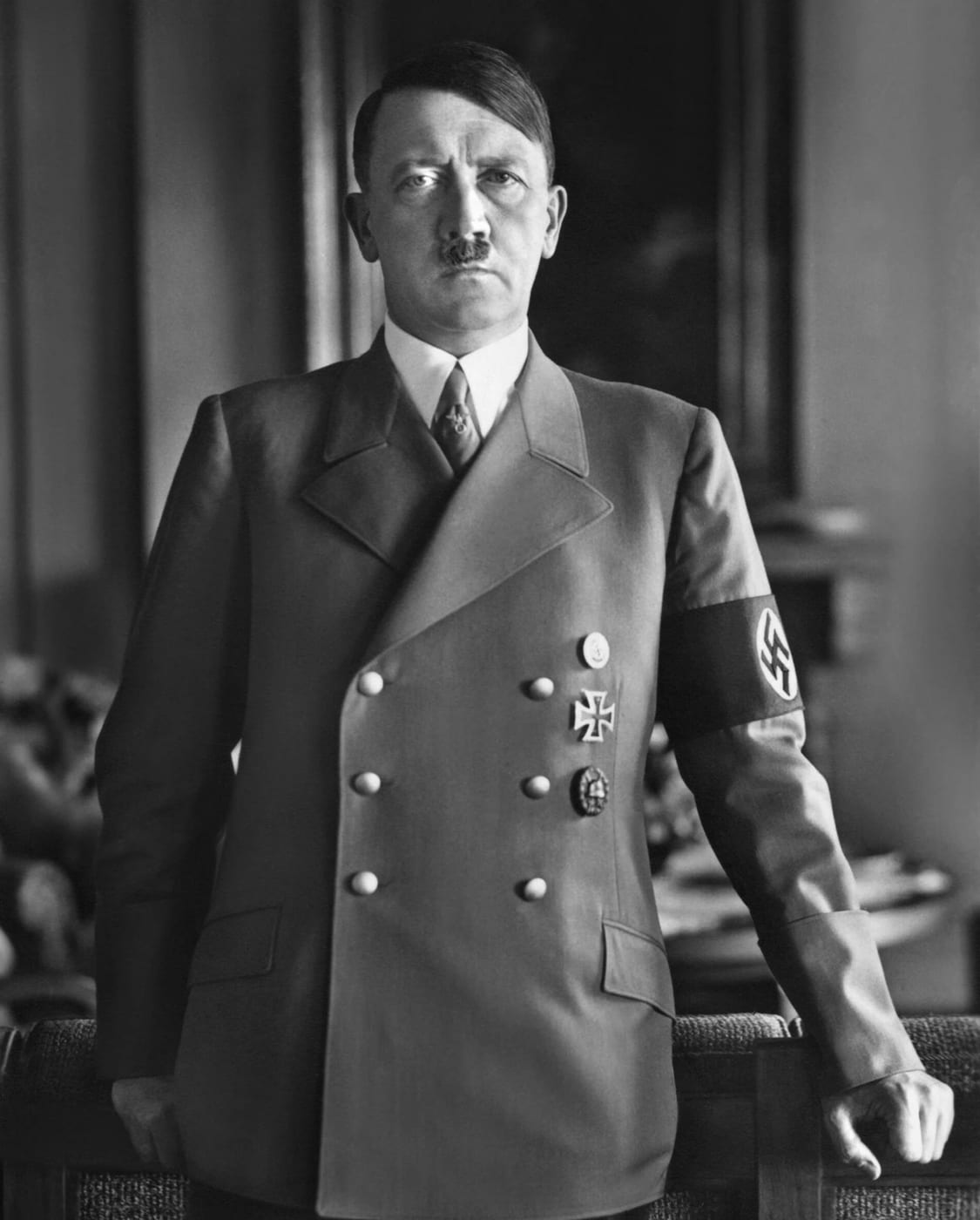
Hitler resented that requirement. He wanted the altarpiece for the Führermuseum he planned in Linz, where he had grown up. Hermann Göring wanted it too. Both regarded its return to Belgium as something to reverse.
Bavaria / 1942
Taken to Neuschwanstein
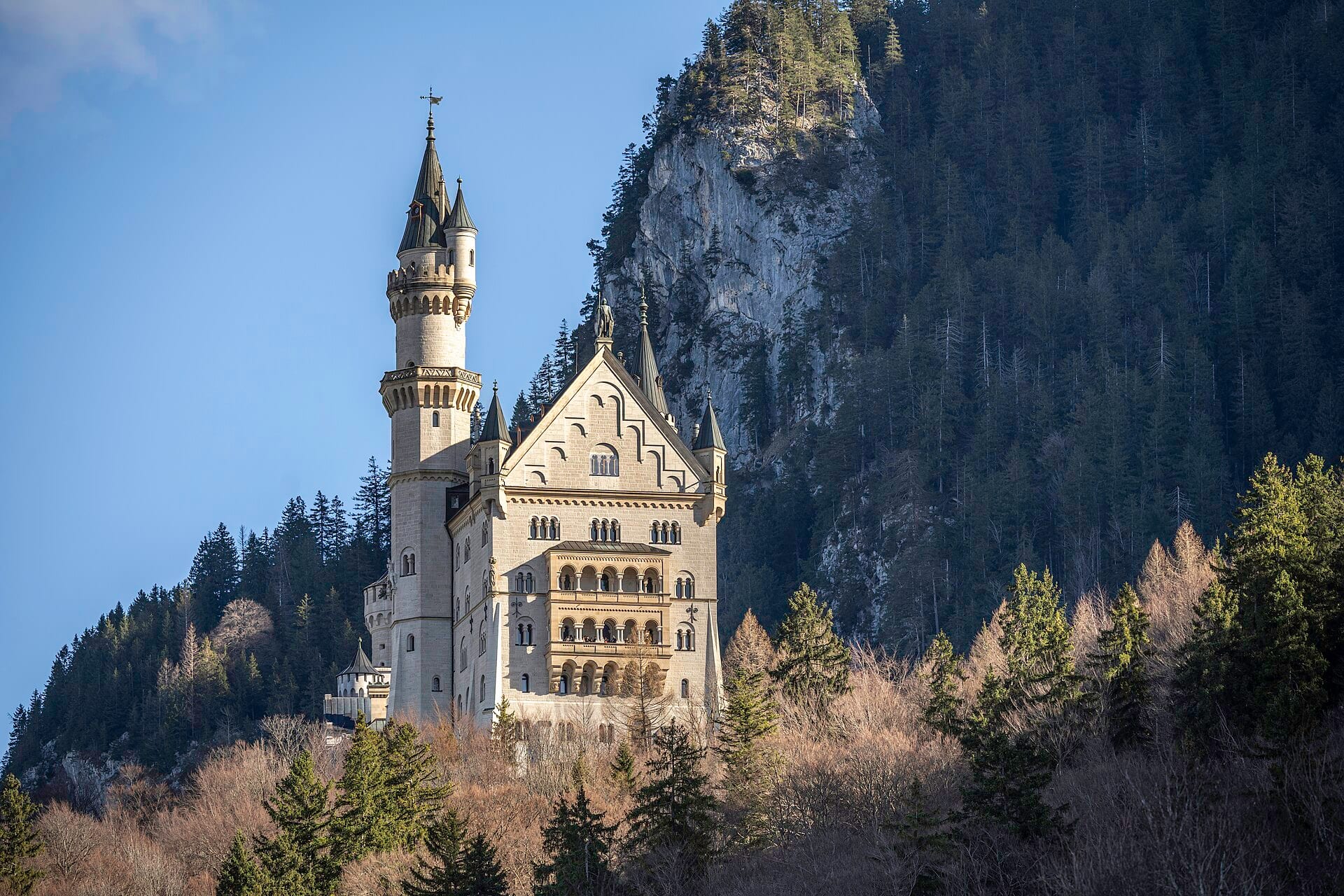
Belgian officials tried to send the altarpiece to the Vatican in 1940, but it remained in Pau, in unoccupied France.
German forces seized the painting in 1942 and took it to Neuschwanstein Castle in Bavaria. From there, it was moved to the salt mine at Altaussee in Austria.
Altaussee / 1943 to 1945
Inside Altaussee
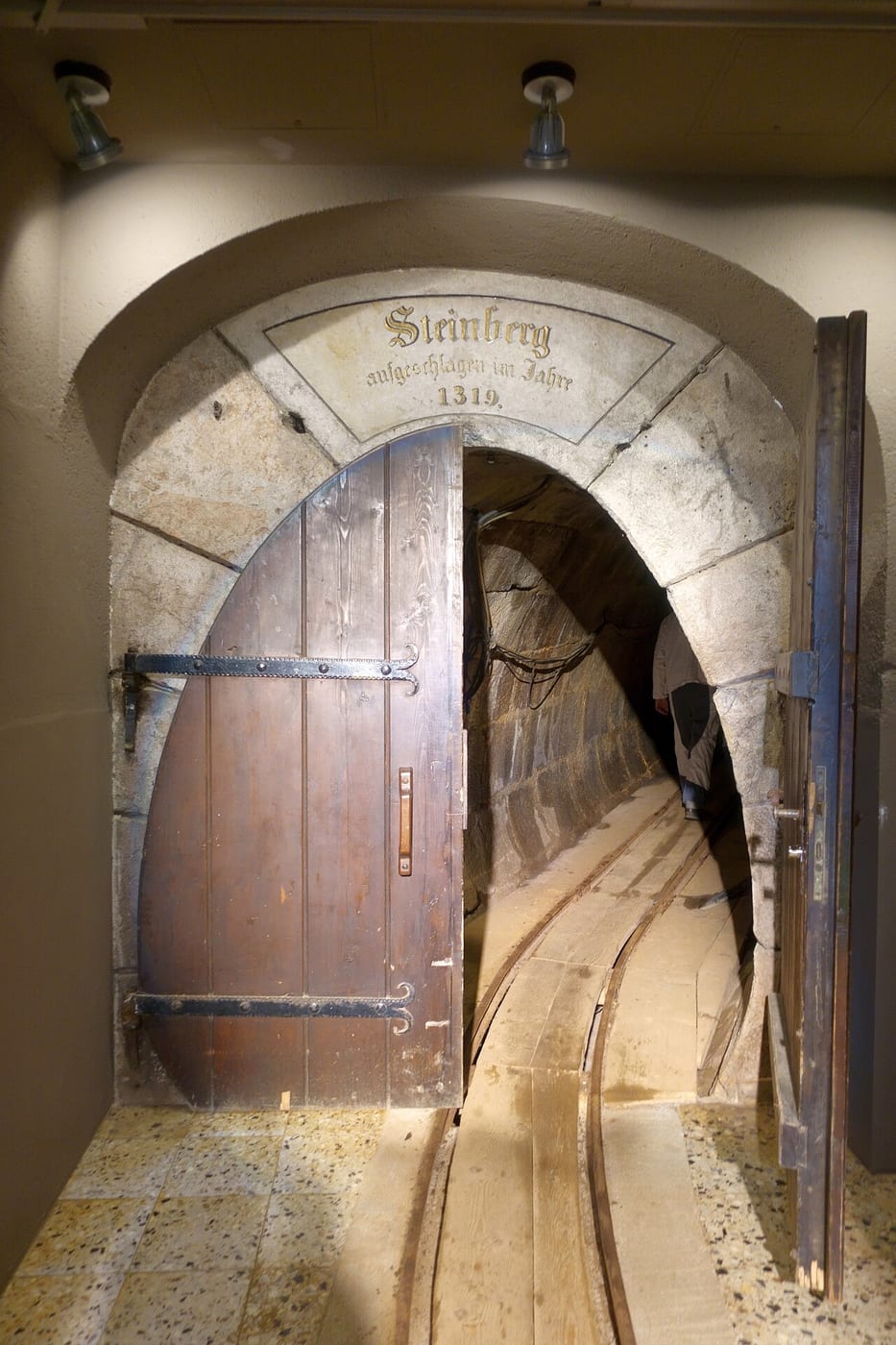
Behind this entrance to the Altaussee salt mine, the altarpiece was stored with thousands of other artworks collected for Hitler’s planned museum.
Source: Photo: Tigerente, Wikimedia Commons(opens the catalogue record in a new tab)Altaussee / April 1945
Saved from destruction
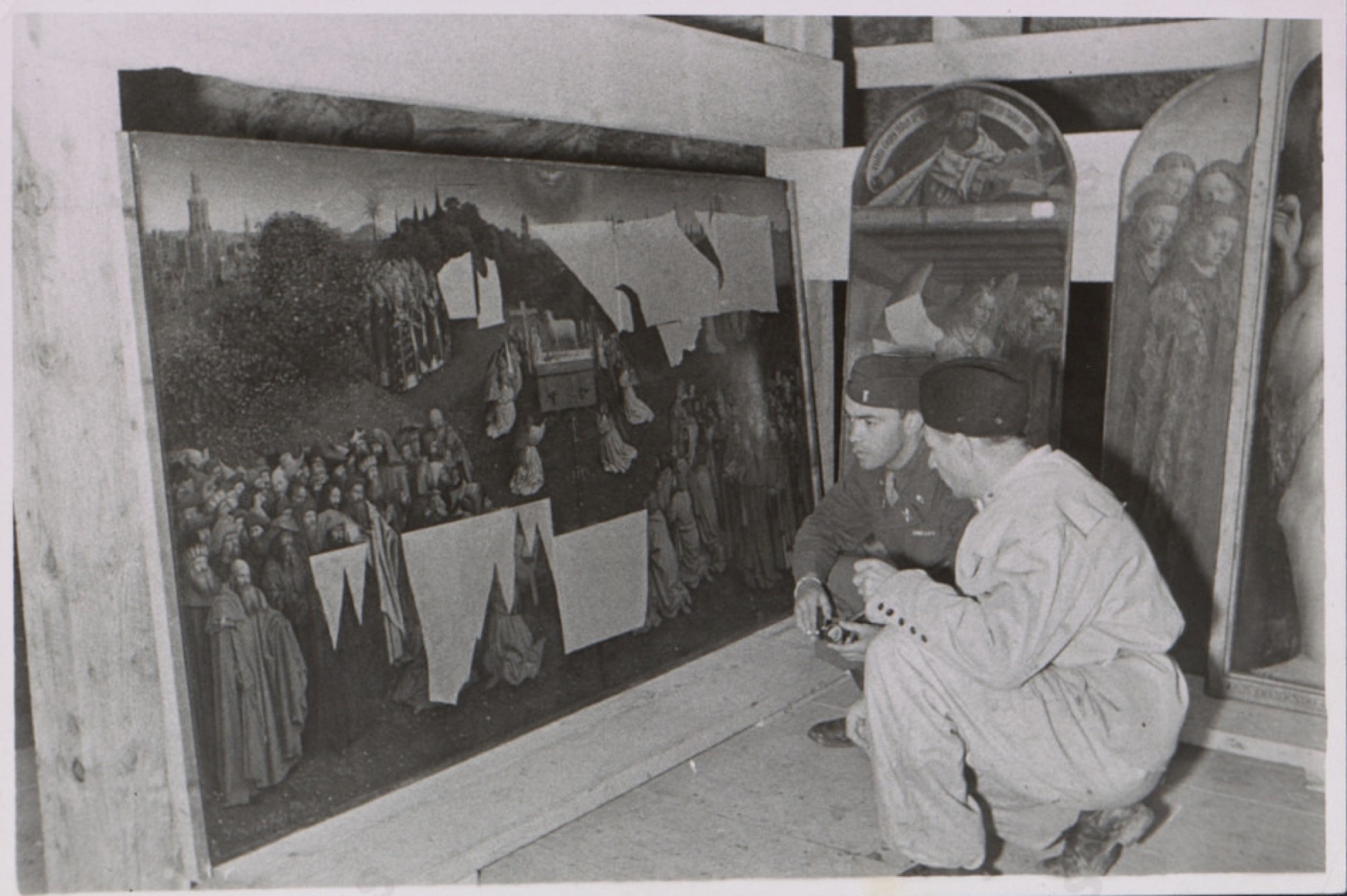
As Allied forces approached in April 1945, explosives threatened the artworks stored in the mine. Local miners and resistance fighters removed the charges before they could be detonated. The Monuments Men later recovered the altarpiece inside.
Source: U.S. National Archives, Wikimedia Commons(opens the catalogue record in a new tab)Brussels / 22 August 1945
Back to Belgium
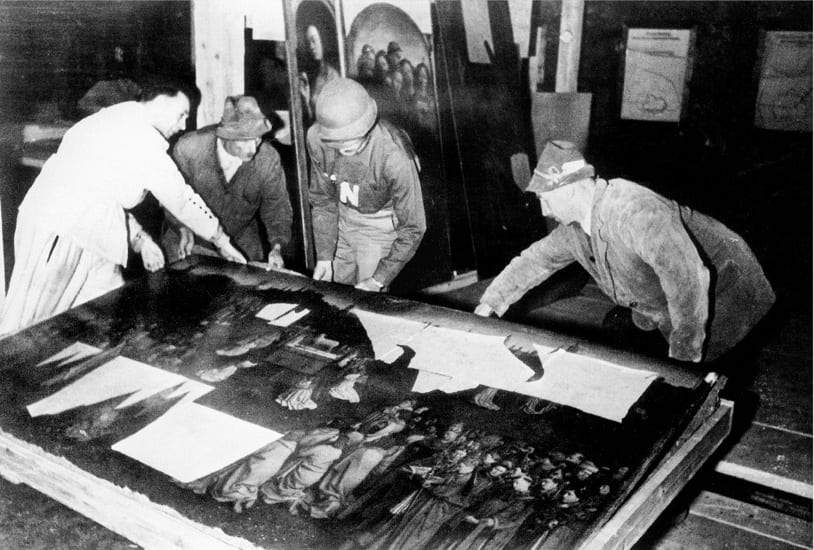
Workers move the central panel at Altaussee in 1945. The altarpiece became the first artwork returned through the Munich collecting point.
It left by air for Brussels on 21 August, but a storm forced the plane to divert. The next day, it was received at the Royal Palace.
The wartime recovery brought the surviving panels home. It could not restore the Just Judges, which had disappeared before the war. To understand that loss, we need to go back to 1934.
Chapter three
One panel vanishes
1934
Six years before the wartime evacuation, someone stole two pictures from the cathedral. A ransom demand followed. One picture was returned, but the Just Judges stayed missing. Then a dying man gave investigators a name and a new lead.
Ghent / 10 April 1934
The Just Judges
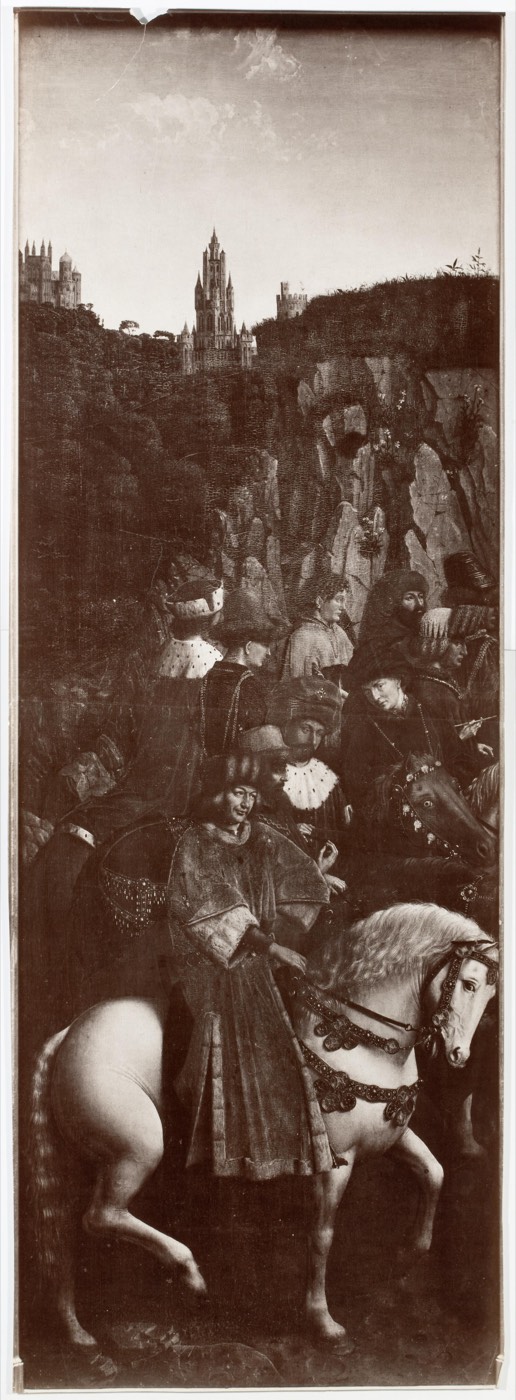
The theft happened overnight, between 10 and 11 April 1934. Someone forced the lock of the Vijd Chapel and removed two pictures. Originally, they had been painted on opposite sides of one oak board. In 1894, the board had been sawn apart so visitors could see both pictures at once.
One showed Saint John the Baptist in shades of grey. The other, the Just Judges, showed riders on horseback in the lower left of the open altarpiece. Some have long been thought to represent the van Eyck brothers.
A French note left on the empty frame read: “Taken from Germany by the Treaty of Versailles.”
Ghent / 30 April 1934
The ransom demand
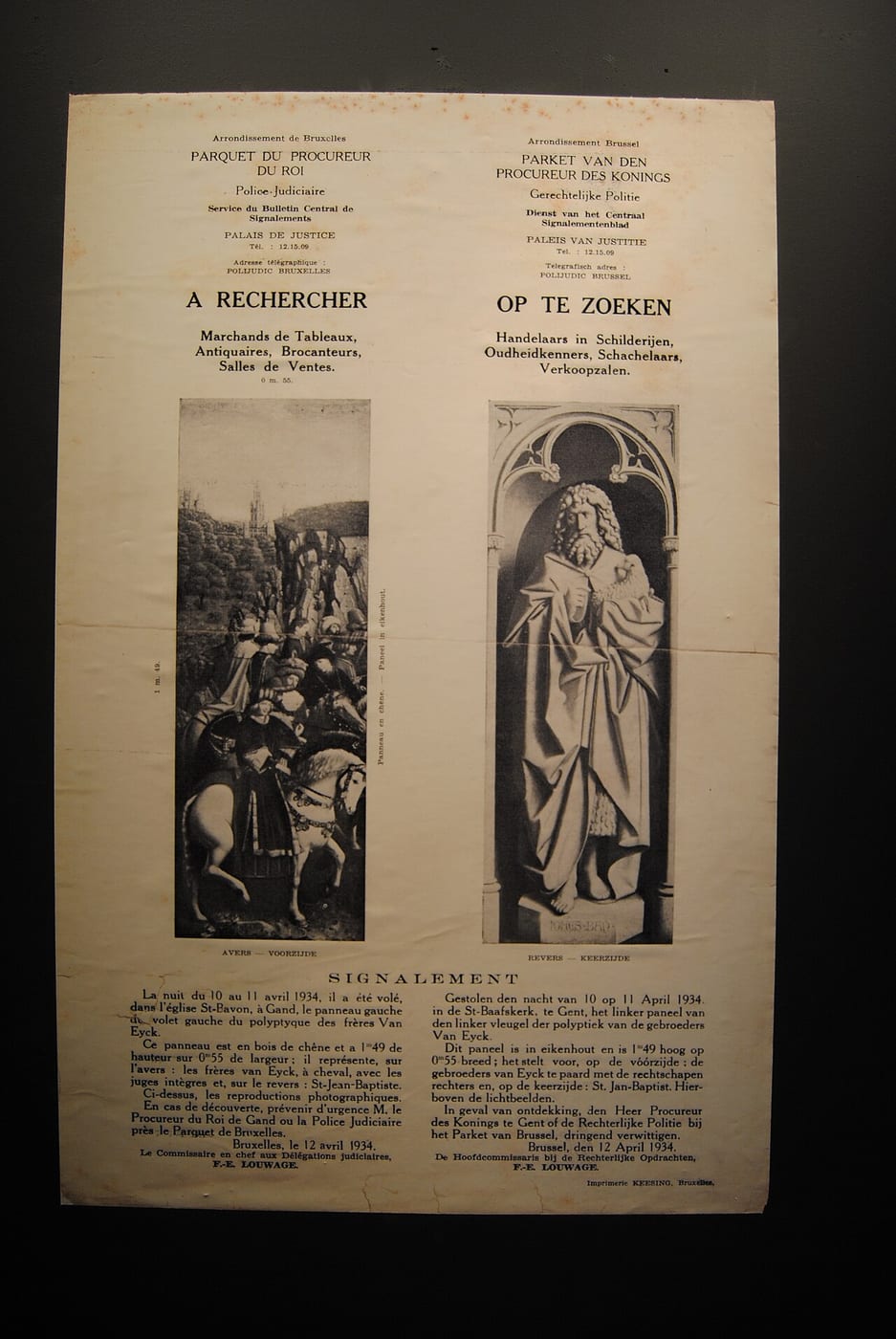
This 1934 notice asked dealers to watch for the stolen pictures. On 30 April, the Bishop of Ghent received a demand for one million Belgian francs, signed D.U.A. The note on the frame suggested a political motive. The letters demanded money.
Source: Photo: Vdkdaan, Wikimedia Commons(opens the catalogue record in a new tab)Brussels / 1934
One picture returns
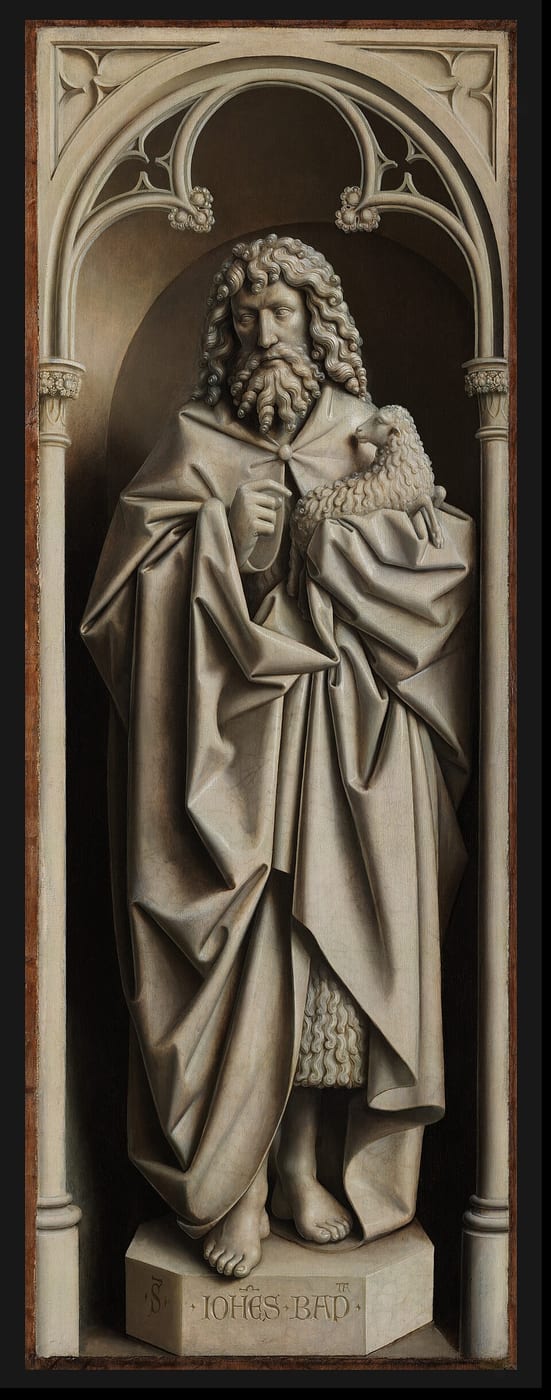
The Belgian government took over negotiations, arguing that the diocese could not decide the ransom of a national treasure. To prove possession, the person sending the letters directed police to a station luggage locker. Inside was the Saint John the Baptist panel.
Accounts differ on whether the locker was in Brussels-North or Ghent. The Just Judges was not there, and negotiations failed.
About thirteen letters survive as carbon copies. One final letter was never sent. Those papers would become the link between the ransom demands and a man in nearby Wetteren.
Wetteren / 25 November 1934
Goedertier’s final claim
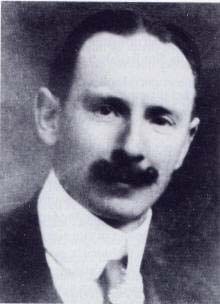
On 25 November 1934, Arsène Goedertier, a stockbroker from nearby Wetteren with connections to cathedral circles, suffered a heart attack. He called his lawyer, Georges de Vos, to his bedside.
Goedertier said he alone knew where the missing panel was. He told de Vos to look in the right-hand drawer of his writing desk for an envelope marked “mutualité.” Before he could explain the location, he died.
The desk contained copies of the ransom letters and the unsent final letter. That last letter described a place where removing the panel would attract public attention, but it gave no clear address. The photograph shows Goedertier during his life; none was taken at the bedside.
Leads and loose ends
De Vos waited about a month before telling police about the letters. Once investigators examined them, they concluded that Goedertier was responsible for the theft. They also suspected he had help from someone inside the cathedral. Neither conclusion led them to the painting, and the formal investigation wound down in 1937.
Another lead came from an unlikely witness: a man who said he had been out stealing cheese. He recalled seeing two men carrying a covered panel near the cathedral at about one in the morning. In 1947, he identified one as the smuggler Polydor Priem. The second man’s identity was never securely established, and any police record naming him has been lost.
While the original remained missing, restorer Jef Van der Veken painted a replacement during the war. It was installed around 1950. He included likenesses of himself and King Leopold III, and wrote a verse about the theft on the back.
Some wondered whether he had painted over the stolen original and returned it in disguise. Technical examination ruled that out. The replacement is a separate painting.
Chapter four
Still missing
1934 to today
Goedertier’s papers gave investigators a suspect, but no hiding place. The final letter has guided searches ever since. It suggests a public location where removing the panel would be noticed. No search has found it.
Ghent / Today
Saint Bavo’s Cathedral
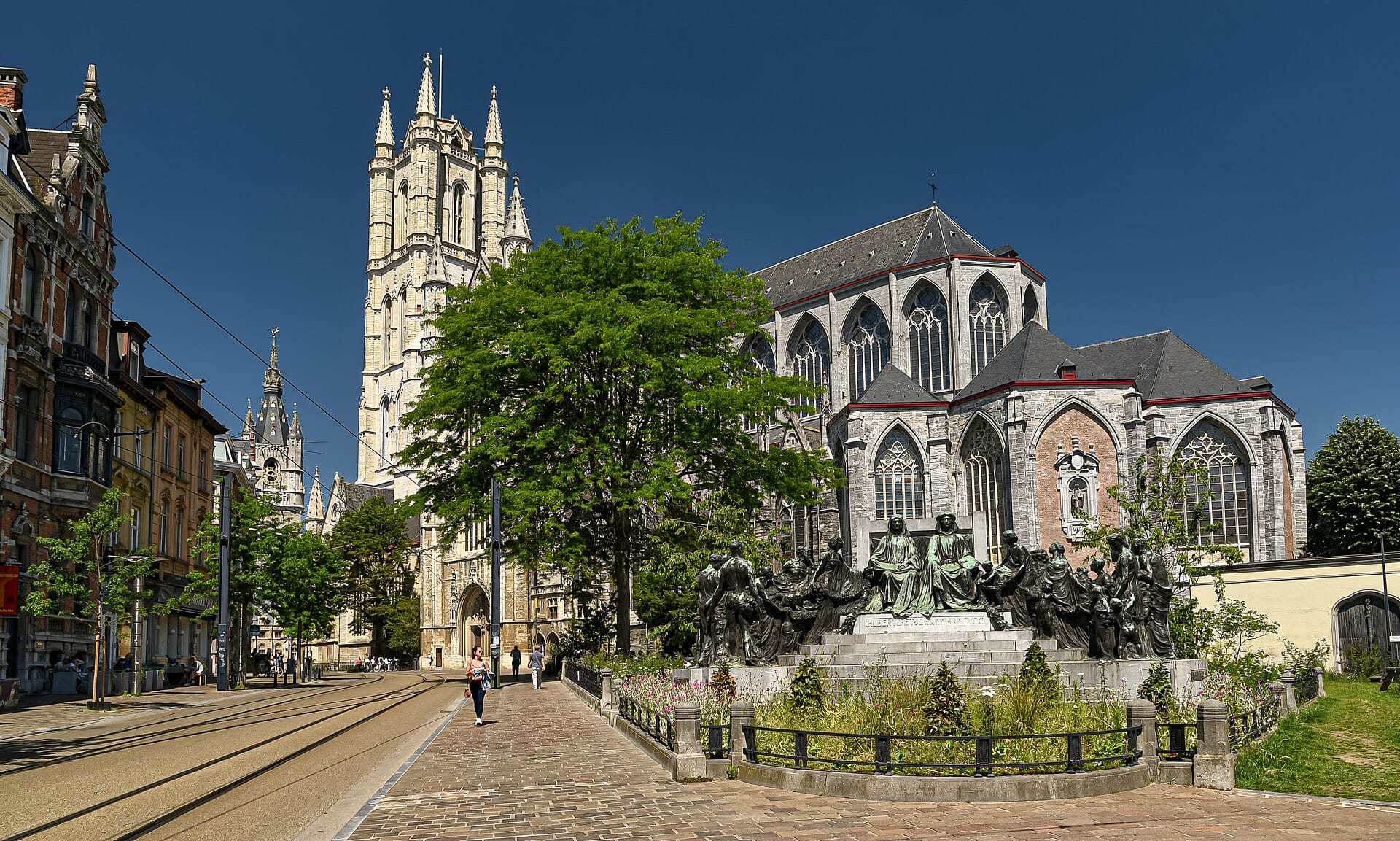
Saint Bavo’s Cathedral is home to the altarpiece, with a monument to the van Eyck brothers outside. The search began close to home, at the cathedral itself. It has been examined repeatedly since 1934. Commissioner Karel Mortier also pursued the case in his own time from 1956 to 1991. The panel was never found.
Source: Photo: Jorge Franganillo, Wikimedia Commons(opens the catalogue record in a new tab)Where it is now
Saint Bavo’s Cathedral, Ghent, Belgium
Sint-Baafsplein, in the old centre of Ghent, Belgium. The altarpiece is inside, displayed behind glass.
Ghent / Today
Eleven originals remain
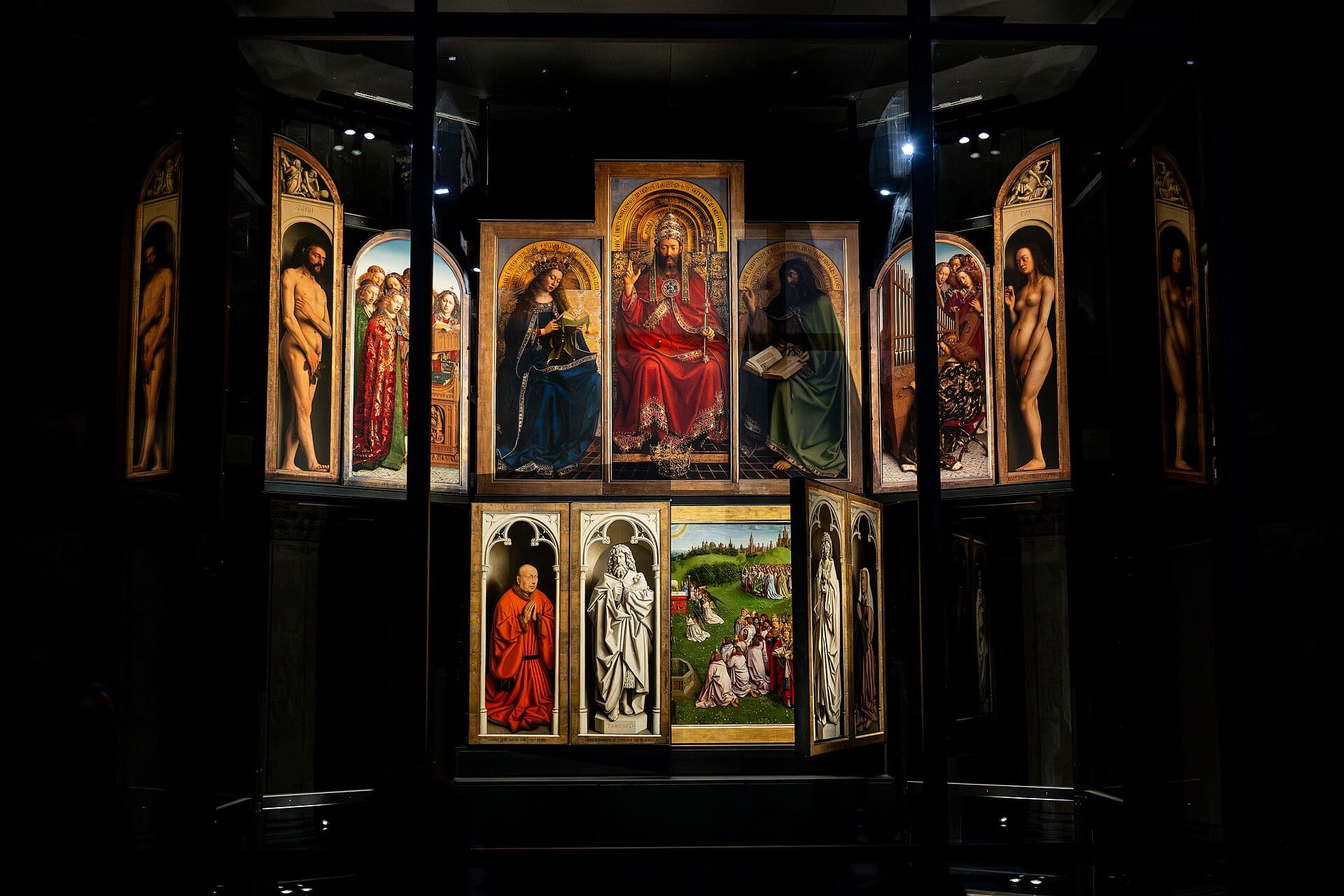
The altarpiece is displayed behind glass in Saint Bavo’s Cathedral. Eleven panels are originals. At the lower left, Van der Veken’s replacement occupies the place of the missing Just Judges.
Source: Photo: Julien Nizet, Belgian Presidency of the Council of the EU 2024(opens the catalogue record in a new tab)Wetteren / Later
A lead in Wetteren
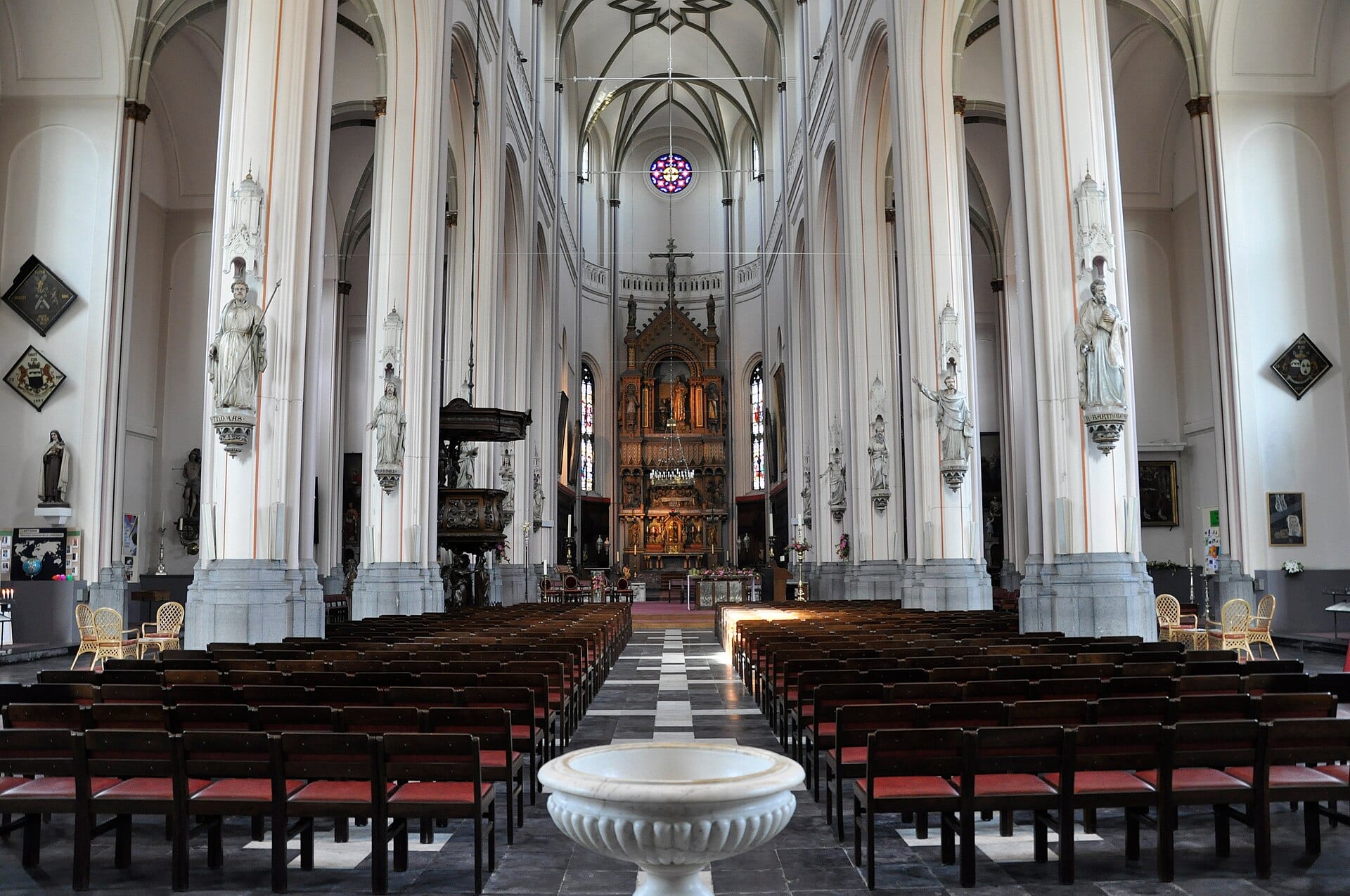
Sint-Gertrudiskerk, the parish church in Goedertier’s hometown, has also drawn attention in the search.
In 2012, a BBC documentary team accompanied Ghent police to a church in Wetteren. A participant later described an outline in the dust behind the church’s rood screen, a partition near the altar. It matched the missing panel’s shape and size, but did not prove that the Just Judges had been there.
It fits one reading of the final letter: a hiding place in a public building. It remains a lead, not an answer.
What might have happened?
In 2008, a tip sent investigators to Sint-Jansvest in Ghent. The claim placed the panel in a zinc case inside a well. Police opened part of an underground car park, but found nothing.
The panel remains listed as missing by the Monuments Men and Women Foundation. No sighting since the theft has been confirmed.
With no confirmed sighting, the explanations remain theories. Goedertier may have acted alone, hidden the panel, and died before he could secure the ransom.
Another is that he handled the letters for someone inside the cathedral who knew the chapel.
The note about Versailles may have been intended to mislead investigators. Whether it concealed a different motive remains uncertain.
Another possibility is that the panel was destroyed after negotiations failed. In that case, Goedertier’s deathbed claim would not have led to a surviving painting.
Or it may still be hidden in a public place, as the unsent letter suggests. After decades of searches, no theory has produced the panel.
Today
One piece missing
90+ years
Missing since the night of 10 April 1934
rests in a place where neither I, nor anybody else, can take it away without arousing the attention of the public.
At Saint Bavo’s Cathedral, the painting looks complete. But the riders at the lower left are Van der Veken’s replacement. The original Just Judges, taken in 1934, is still unaccounted for.
The remaining panels have given up some of their secrets through restoration. The missing one has left only letters, leads, and an unanswered question: where did it go?
You can explore the painting’s details yourself. The restoration images, underlying drawings, and reports are freely available at closertovaneyck.kikirpa.be.
1426 to today
How it unfolded
1426
Hubert dies, leaving the work unfinished.
6 May 1432
Completed by Jan, the altarpiece is installed in the Vijd Chapel.
1920
Under the Treaty of Versailles, the Berlin panels return and the separated sections are reunited.
10 to 11 April 1934
The Just Judges and Saint John the Baptist are stolen. A note is left on the frame.
30 April 1934
The first ransom letter arrives, signed D.U.A.
25 November 1934
Goedertier claims on his deathbed to know the hiding place, but dies without revealing it.
1943 to 1945
The altarpiece is stored at Altaussee. Explosives are removed before the Monuments Men recover it.
About 1945 to 1951
Van der Veken’s replacement for the Just Judges is painted and installed.
2012 to 2020
Restoration reveals early paint layers, uncovers the original lamb, and confirms the frame inscription.
Today
Eleven original panels remain at Saint Bavo’s. The Just Judges is still missing.
Behind our name
Why Triptych?
We worked as L2D for more than fifteen years. After 2020, the studio had grown beyond what that name described. We asked our team to help find one that fit where we were headed.
A triptych brings separate panels together to make a complete picture. That felt familiar. Our work brings strategy, design, and development together, with each discipline contributing something the others need.
The name stuck because it describes how we work.
Strategize
Get clear on what the project needs to accomplish and who it needs to serve before design begins.
Design
Shape the experience, test it with real content, and refine it until it works for the people using it.
Develop
Build it to run well, stay fast, and be straightforward to maintain as needs change.
Read the story behind our rebrand.
Triptych FAQs
- What is a triptych?
- A triptych is an artwork made of three panels, either hinged together or placed side by side. In many historical examples, two outer wings fold over a central panel.
- Why do triptychs have three panels?
- Three panels give an artist room for a central scene and two related views. Hinged examples could close for storage, travel, or everyday display, then open for special occasions. The format developed from earlier two-panel forms, including Roman ivory writing tablets.
- What is the most famous triptych?
- Hieronymus Bosch’s The Garden of Earthly Delights is one of the best-known examples. Painted around 1490 to 1510, it hangs in the Prado in Madrid. The Ghent Altarpiece, completed in 1432, is another landmark of the hinged altarpiece tradition, though it contains twelve panels rather than three.
- What did a closed triptych look like?
- The outside was often quieter than the interior. Some showed figures painted in grey to resemble stone sculpture, a technique called grisaille. Others displayed a coat of arms. Opening the wings revealed the colour and detail inside, often on feast days.
- Are triptychs still being made?
- Yes. Artists continue to use three panels to connect scenes, perspectives, or ideas. Francis Bacon’s Three Studies of Lucian Freud, painted in 1969, sold at Christie’s for $142.4 million in 2013, setting the auction record at the time.
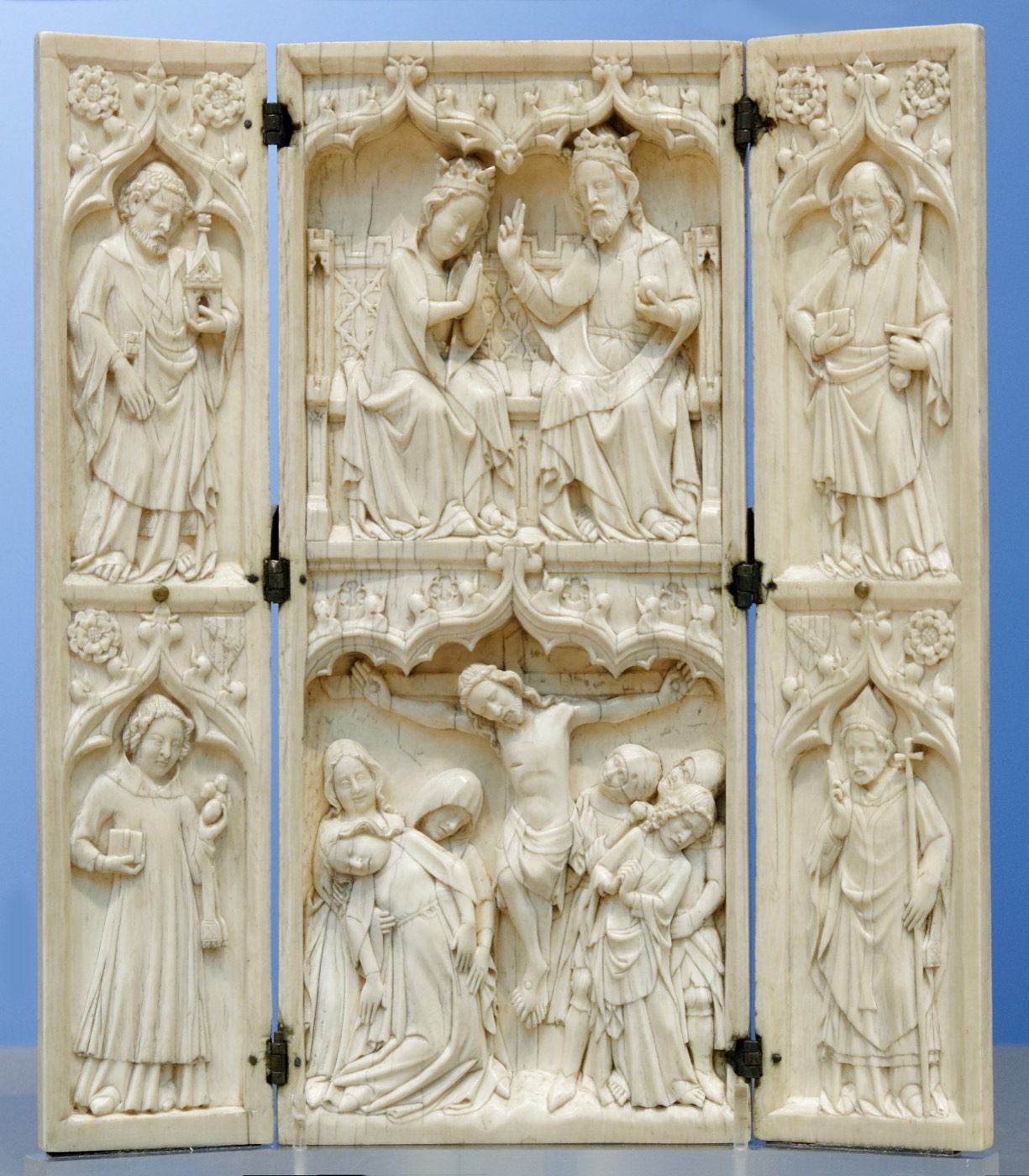
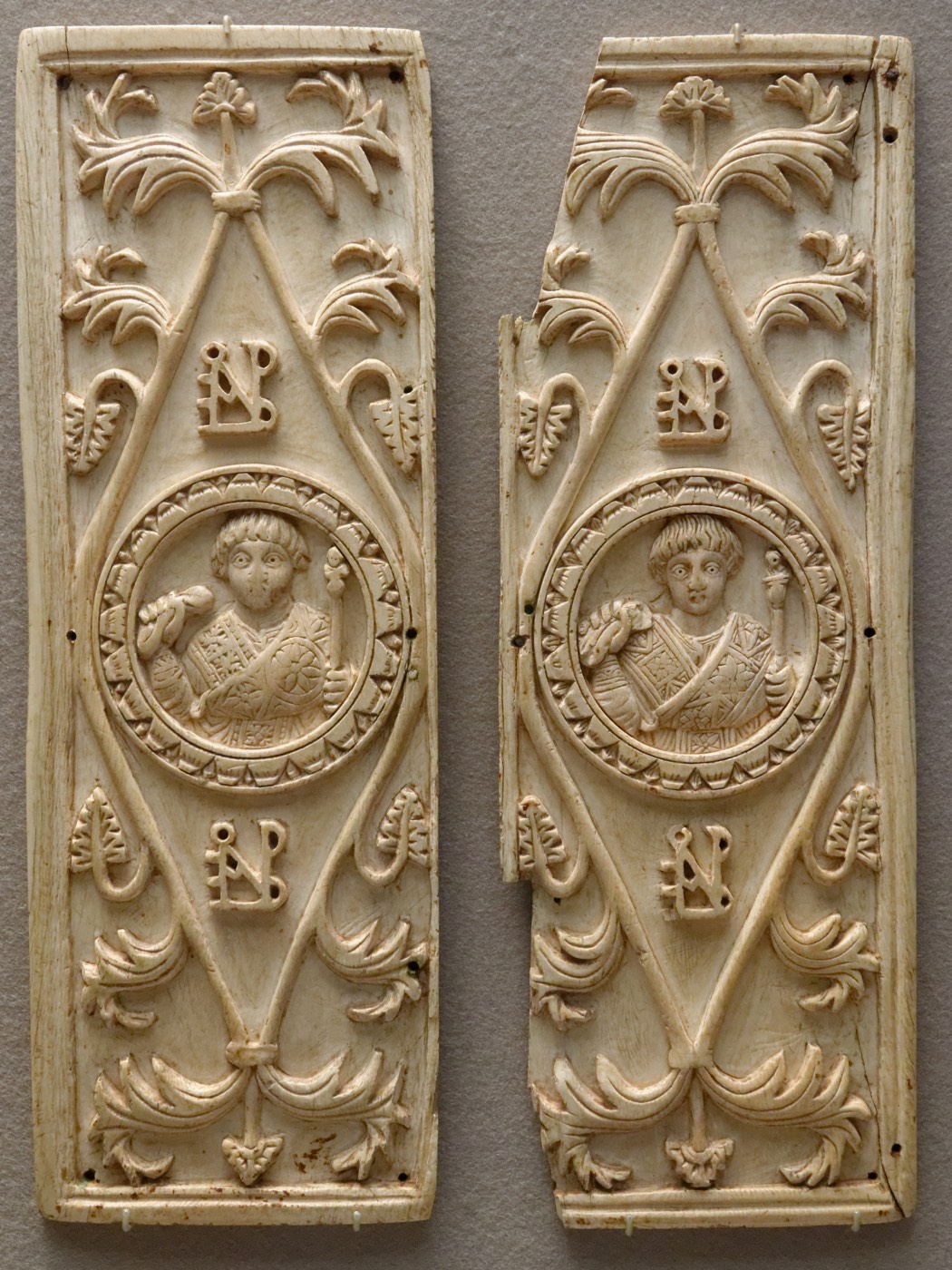
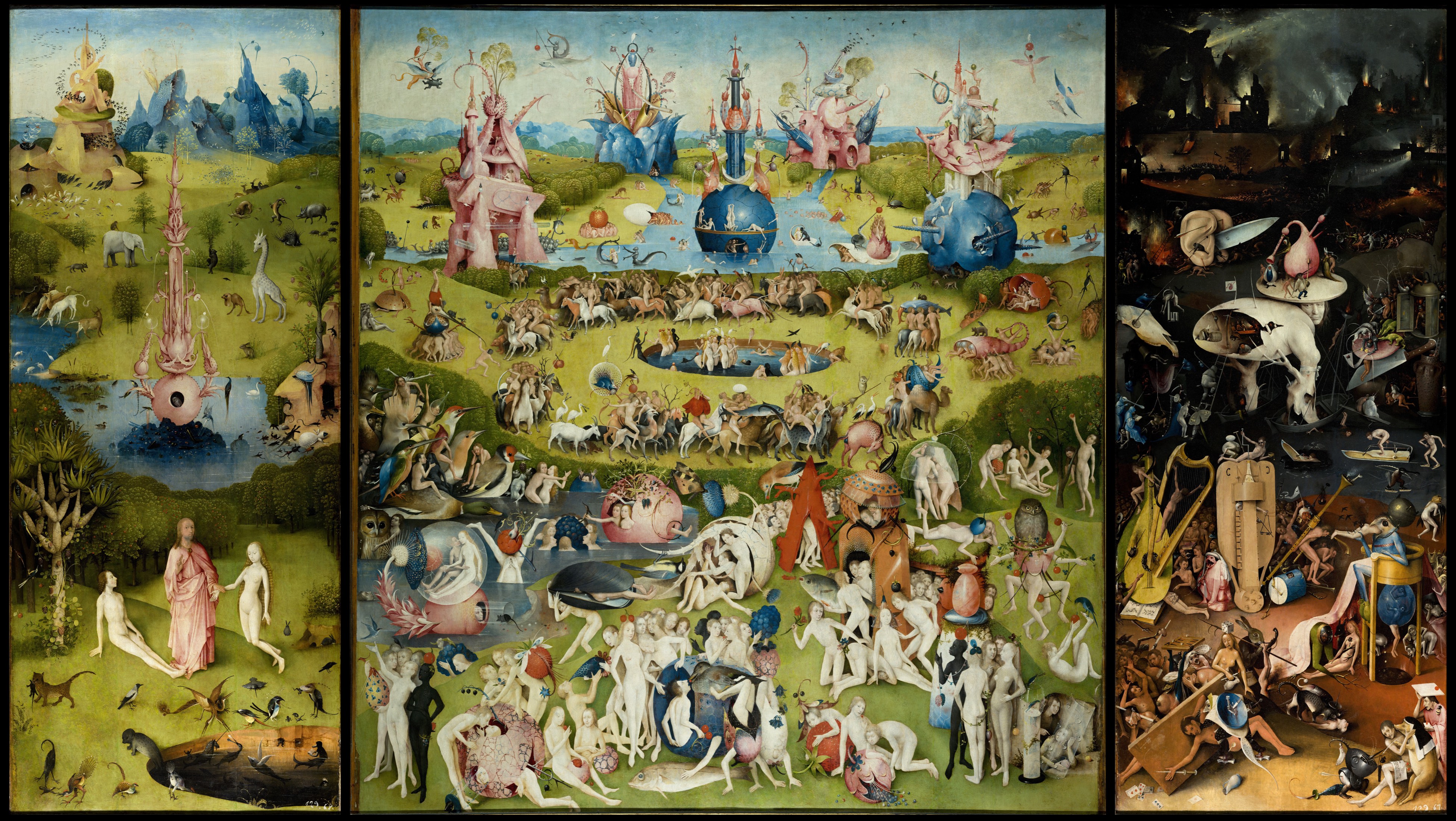
Image credits (20 pictures)
- Hubert van Eyck · Rijksmuseum, Amsterdam, CC0.
- Beneath the altarpiece · Photo: FrDr, Wikimedia Commons, CC BY-SA 4.0.
- Jan van Eyck · National Gallery, London, Public domain.
- The everyday view · Wikimedia Commons, Public domain.
- Written on the frame · KU Leuven, Wikimedia Commons, Public domain.
- Adoration of the Mystic Lamb · Wikimedia Commons, Public domain.
- The original lamb · Wikimedia Commons, Public domain.
- Hidden in the tower · Rijksmuseum, Wikimedia Commons, CC0.
- Hitler wanted it · Bundesarchiv, Bild 183-H1216-0500-002 / Heinrich Hoffmann, CC BY-SA 3.0 DE.
- Taken to Neuschwanstein · Photo: Wilfredor, Wikimedia Commons, CC0.
- Inside Altaussee · Photo: Tigerente, Wikimedia Commons, CC BY-SA 4.0.
- Saved from destruction · U.S. National Archives, Wikimedia Commons, Public domain.
- Back to Belgium · U.S. National Archives, Wikimedia Commons, Public domain.
- The Just Judges · Wikimedia Commons, Public domain.
- The ransom demand · Photo: Vdkdaan, Wikimedia Commons, CC BY-SA 3.0.
- One picture returns · Wikimedia Commons, Public domain.
- Goedertier’s final claim · Wikimedia Commons, Public domain.
- Saint Bavo’s Cathedral · Photo: Jorge Franganillo, Wikimedia Commons, CC BY 2.0.
- Eleven originals remain · Photo: Julien Nizet, Belgian Presidency of the Council of the EU 2024, CC BY 2.0.
- A lead in Wetteren · Photo: Paul Hermans, Wikimedia Commons, CC BY-SA 3.0.